
Ceviche is the famous dish from Latin America where fresh fish and other seafood is “cooked” in lime juice and mixed with chilli, coriander/cilantro, onion and other flavourings. Also known as cebiche, seviche or sebiche, this quick and easy recipe makes a wonderful light meal for hot summer days, or an elegant starter.
The one thing that makes this ceviche recipe stand out from the rest is that it’s not too sour. Limes in South America aren’t as sour as ours!
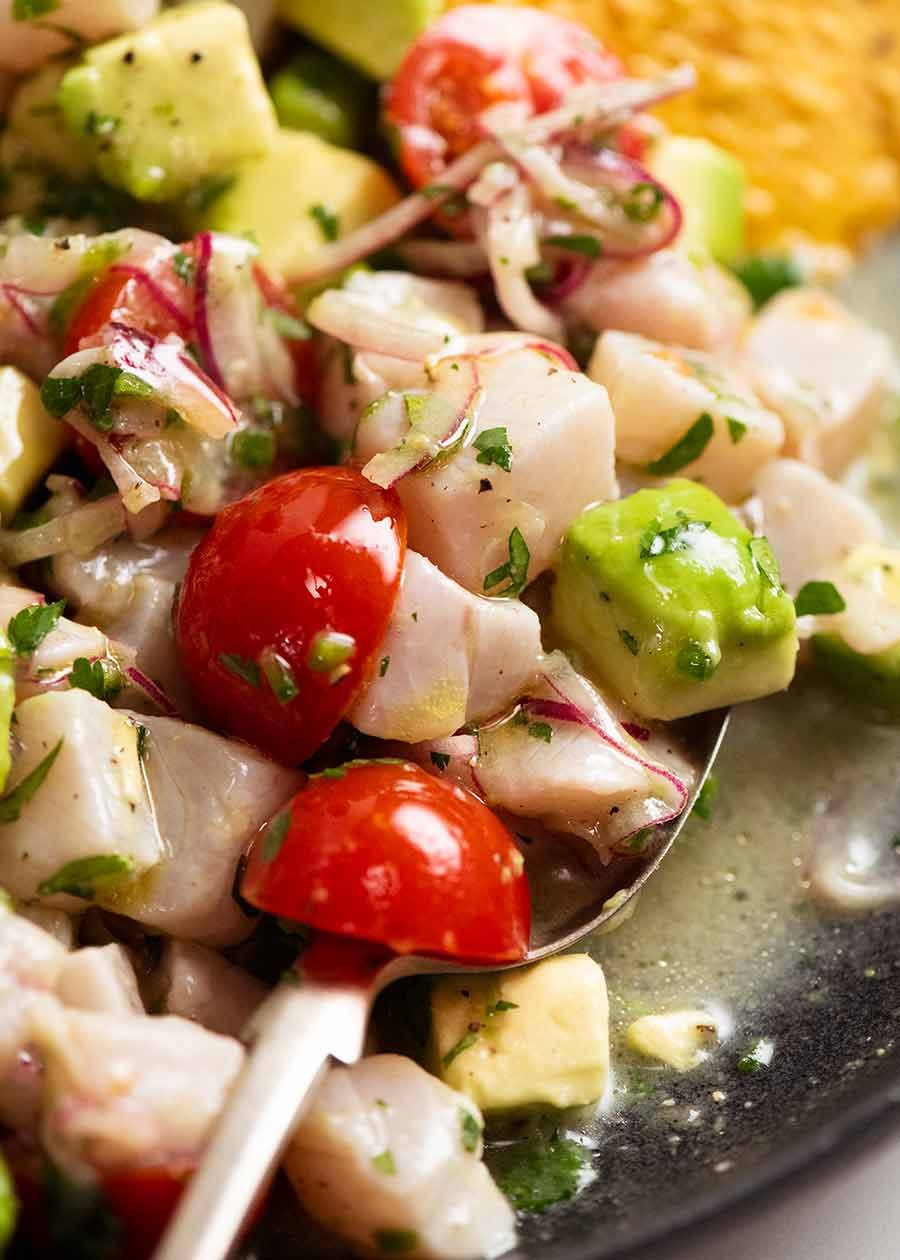
Ceviche
Originating from the west coast of South America, today ceviche can be found in various forms from Mexico down to Peru and beyond. It’s also a dish that has been embraced by fine dining establishments around the world. It plates up elegantly and is an ideal light seafood starter to precede a richer main.
Plus, it’s the sort of dish that people don’t ordinarily think of as simple to make at home, so restaurants readily charge a small fortune for it.
I’m here to bust that myth! As long as you can get your hands on sparkling fresh fish, ceviche is dead easy to make – and super quick too!
Buying sashimi-grade fish suitable for raw consumption is readily available these days, making dishes like ceviche infinitely accessible for ordinary folk like ourselves!
Raw fish + lime juice + 5 minutes = Ceviche!
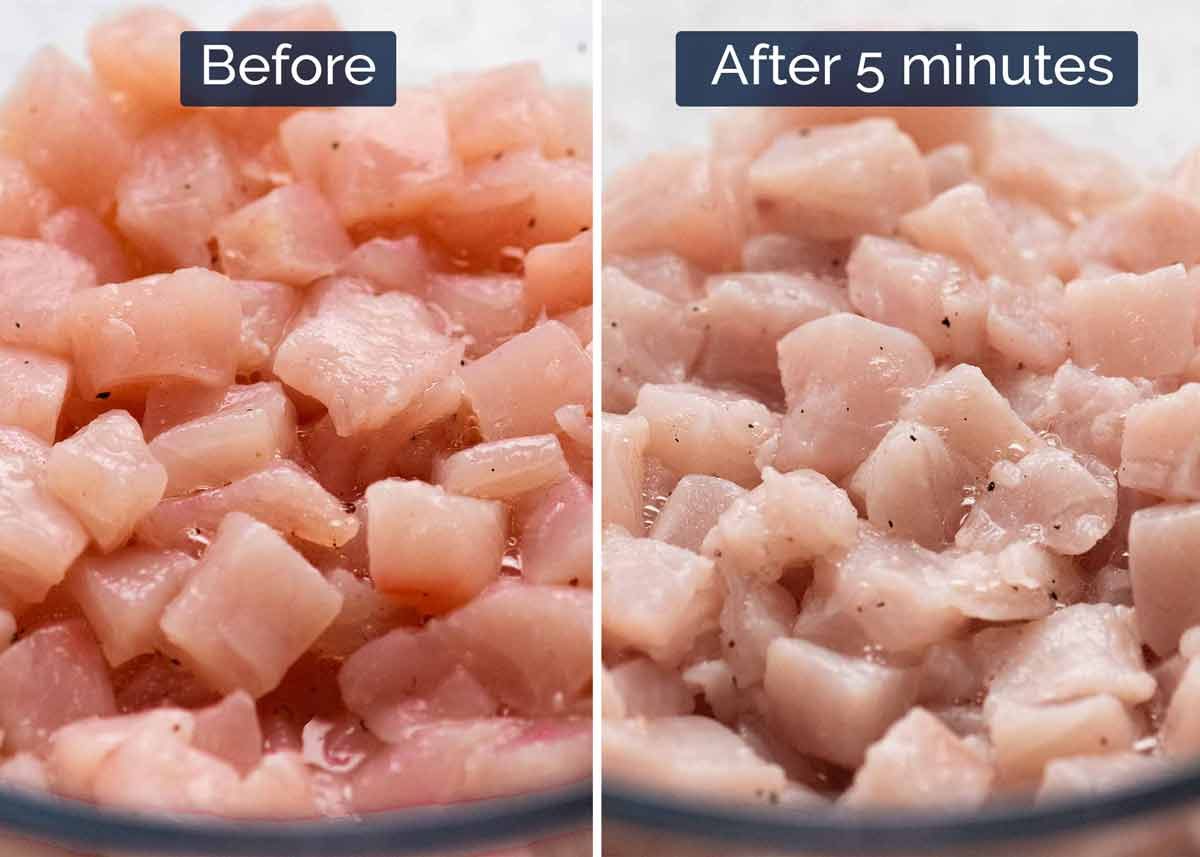
At its core, Ceviche is as simple as tossing raw fish with lime juice, then leaving it for 5 minutes to let the acid “cook” the fish, making it turn white on the surface, but still raw inside.
Here’s a comparison of the fish immediately after tossing with lime (fish is still translucent), then 5 minutes later, it’s turned white because it’s cooked!
It MUST be sashimi-grade fish
The ONLY fish you should use for ceviche is sashimi-grade fish that is suitable for raw consumption. It is not enough to just buy “fresh fish” from the stores – this only means it’s considered generally “fresh” from the fishmonger’s standpoint. It does not mean it’s necessarily fresh enough to eat raw. You need to check with the fish monger that it is “sashimi grade” (usually it will be helpfuly labelled 🙂 ) and is safe it eat raw.
I know that the thought of eating raw fish from the fishmonger versus at a restaurant might make some people nervous, but food safety standards nowadays here in Australia are such that you shouldn’t have cause for concern. I’ve been eating store-bought raw fish all my life since it became available in the late 90’s and I’ve never had a problem.
Of course, if you happen to have a fisherman friend, you can use virtually any freshly-caught fish – it’s all sashimi-grade! As a child, before sashimi was widely consumed in Australia, my parents would take us fishing every weekend just so we could catch fresh fish for sushi!
Best fish for ceviche
There is no one way to make ceviche, and there is no single “best fish” for ceviche because it’s driven by the types of seafood available in different regions! There’s plenty of options, so I’m going to list the most common ones for you:
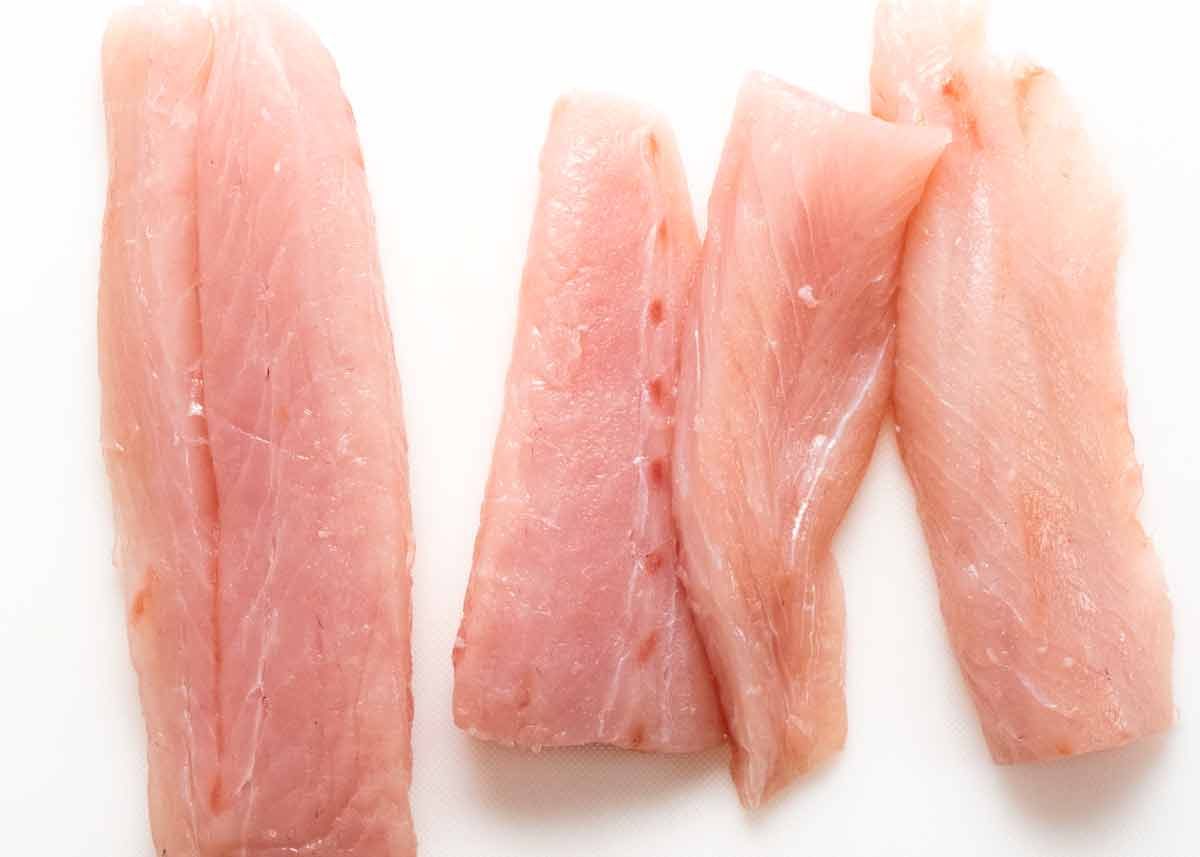
Kingfish (pictured above) – prized for it’s soft white flesh, very popular in Japanese sashimi (shows how good this fish is!). This is one of 3 common sashimi-grade fish sold at Australian fish shops (along with salmon and tuna) and a popular choice of fine dining establishments;
Sea bass – traditionally used for Peruvian Ceviche and easily found in the UK/US;
Tuna – popular in Mexico (along with prawn/shrimp);
Mackerel – also popular in Mexico;
Prawns / shrimp – traditional in Ecuador and popular in Mexico, often with a dash of tomato juice;
Halibut or Patagonian tooth fish – Chile;
Salmon – though not traditional (because white fish is traditional), salmon is excellent made into ceviche. Easy to find in Australia;
Bream – many species, depending where in the world and widely used;
Swordfish – if you are lucky enough to get it(!), this is used in some Latin American countries.
Trevally – Although we haven’t seen it mentioned, raw trevally is beautifully soft-textured and would make a fine ceviche. Available at some good fishmongers here in Australia; and
Cod and mahi mahi – Popular options in America.
Fish that is not suitable for Ceviche
As a general rule, fish that are tender and not chewy when raw will make better ceviche. This is because the fish in ceviche is cut chunkier compared to the fine slices used in say fish carpaccio or sushi. Thus fish like snapper, grouper, some cods, flounder, which can be sometimes a bit tough eaten raw, are less suitable.
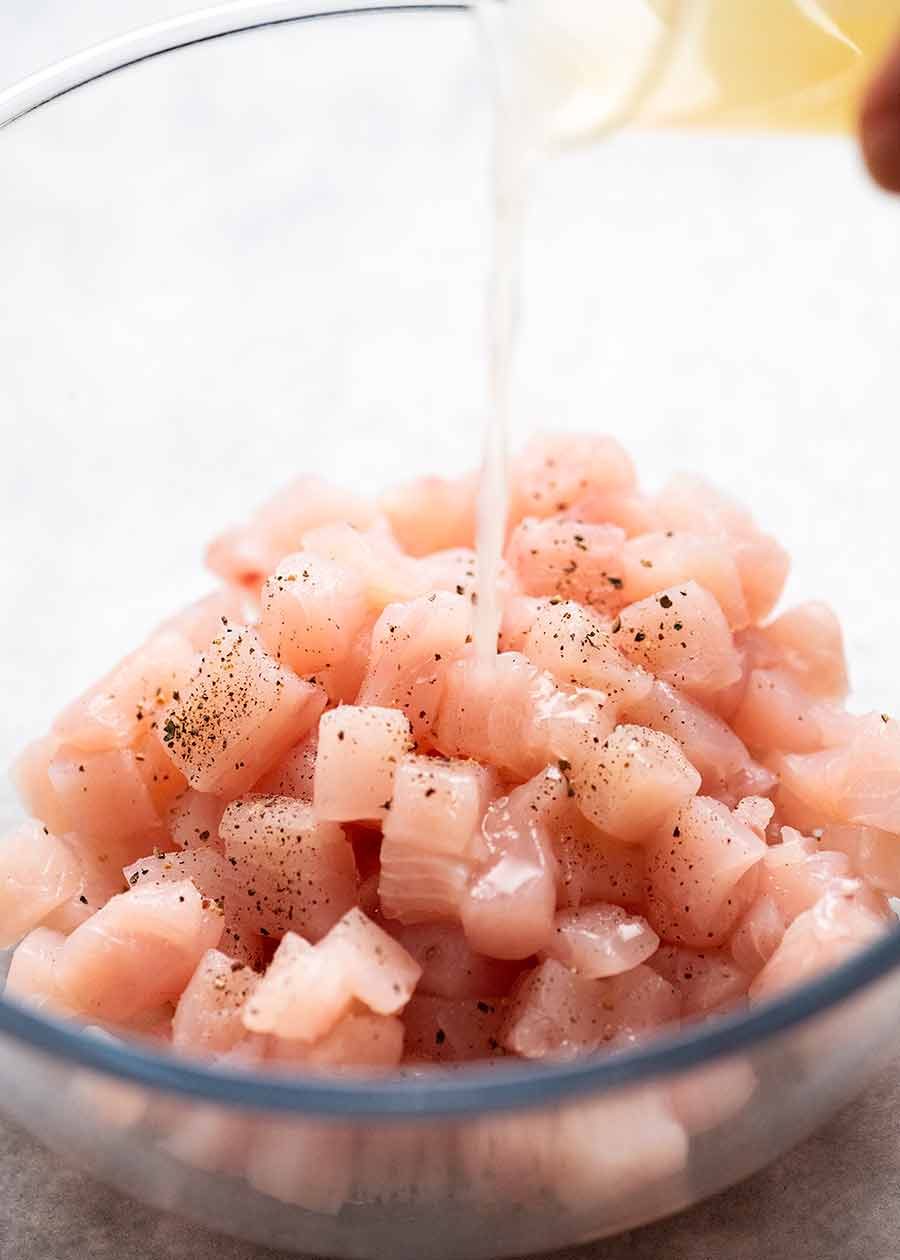
There’s no one way to make ceviche. Each country, city, restaurant and household has their own way. At its core, however, the avocado and jalapeño in this makes this a Mexican Ceviche.
What (else) goes in Ceviche
Here are the other ingredients required for this recipe:
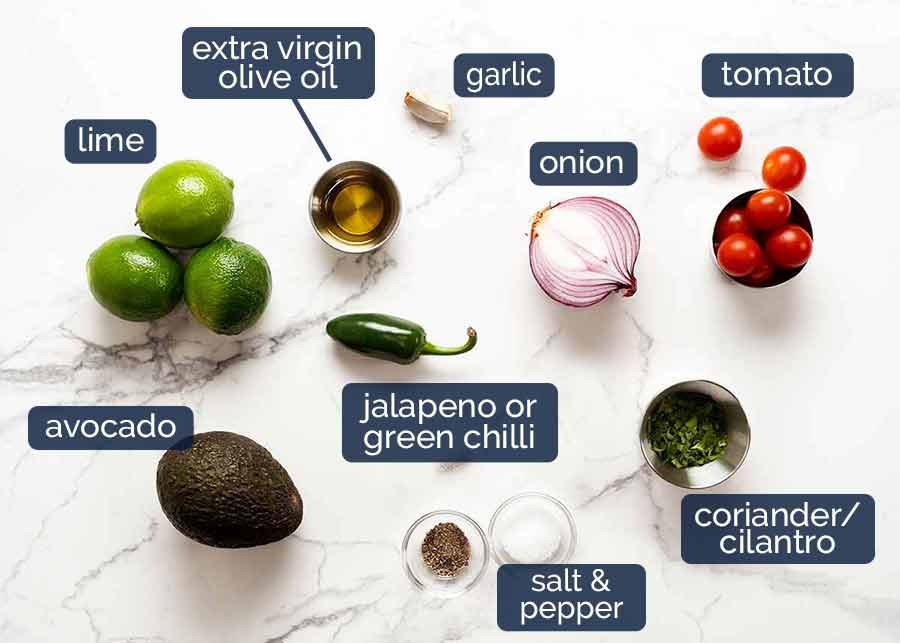
Limes – the essential ingredient that “cooks” the fish;
Extra virgin olive oil – just a touch will take the sharp, sour edge off the otherwise totally sour dish. It’s not strictly traditional to include this, but it’s important to know that limes in Latin America – certainly in Mexico – are often not as sour as those in most Western countries, including Australia and the US. Without oil, I find Ceviche is too sour. Even in Mexico, I found most Ceviches there to be too sour! (*She ducks as Mexicans throw rotten tomatoes at her!*)
Avocado and jalapeño – these add ins are traditional in some versions of Ceviche found in Mexico. Creamy pieces of avocado are a sensational pairing with the delicate pieces of fish!
Coriander/cilantro – essential fresh herb flavouring for ceviche. Coriander haters – sub with chives;
Red onion – very finely sliced so it flops and melds with the fish;
Garlic – crushed using a garlic press so it’s minced finely and “juicy”. We just use 1 small clove – it shouldn’t be overly garlicky; and
Tomato – included in some traditional versions, I really love just adding a bit (not too much) for beautiful pops of colour and fresh juiciness.
How to make Ceviche
The making part is very simple, but I’ve found the key is the order in which ingredients are added – ie what is marinated with the fish, and what is best added later.
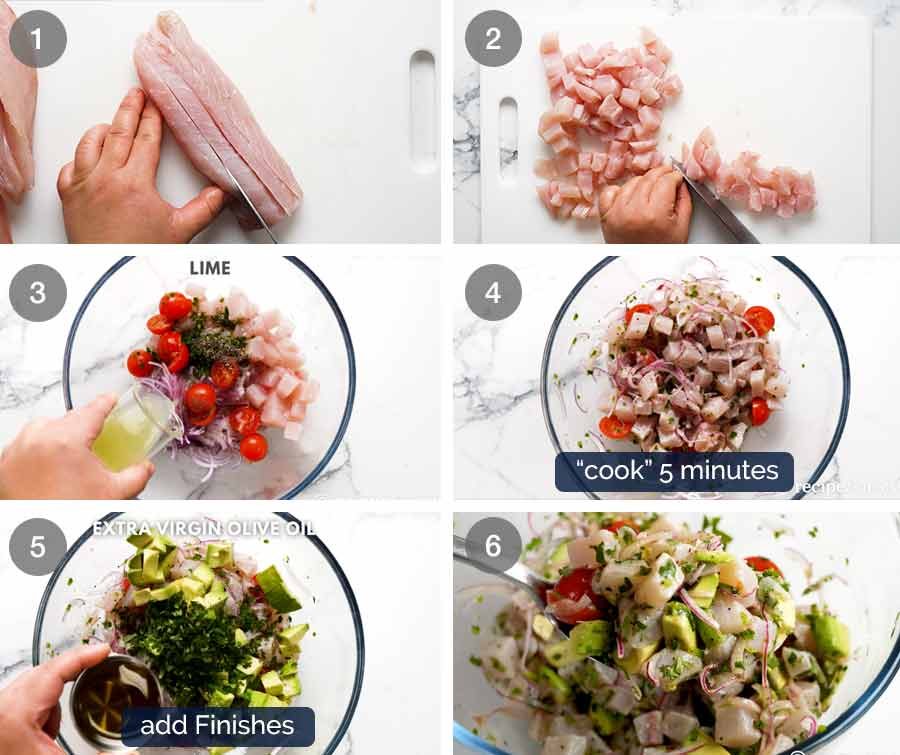
Fish – cut the fish into long strips;
Dice – then cut it into small cubes;
Combine fish with tomato, onion, jalapeño, pepper and lime juice. Do not add salt (this draws water out of the fish), avocado (these get bashed around too much when tossing) or olive oil (this dilutes the acidity of the lime juice and slows down the cooking too much);
“Cook” 5 minutes – gently mix, then set aside for 5 minutes to let the lime “cook” the fish;
Add olive oil, avocado, fresh herbs, salt then gently mix;
Serve immediately.
Despite what other recipes will tell you, there’s no need to be in a manic rush to get the ceviche on the table within 10 seconds otherwise the lime will over cook the fish. Ceviche is certainly best eaten fresh, but it’s still wonderful 20 minutes later. It’s not until around the 30 minute mark that the fish becomes a bit too firm for my taste (literally completely cooked through – but not like stove cooking so it’s not the best texture).
Note: In some countries (such as Peru), ceviche is traditionally left to “cook” for several hours in the lime but larger pieces of fish are used. I like using small pieces – for better texture and ease of eating.
How to serve Ceviche
Just as there is no one way to make Ceviche, there are plenty of ways to serve it too!
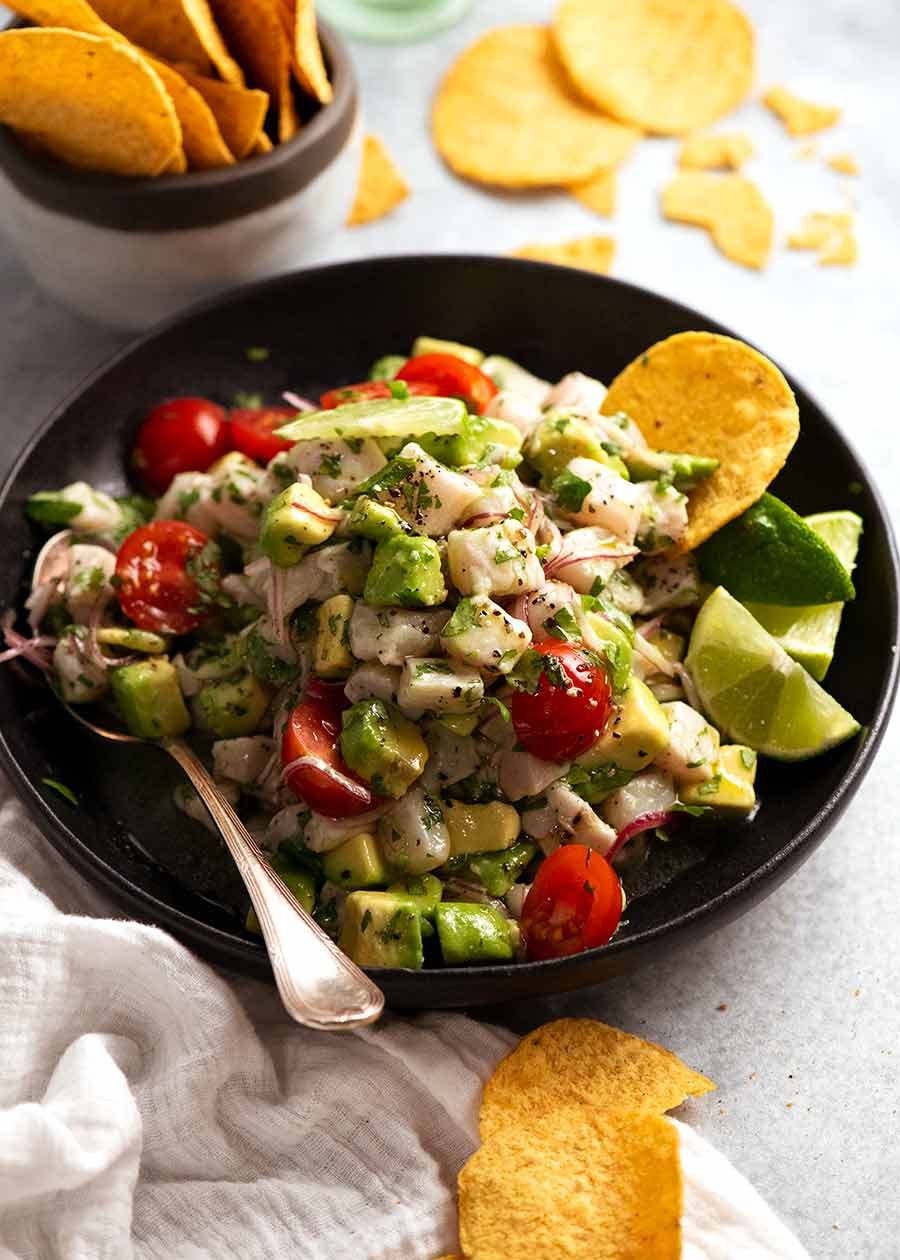
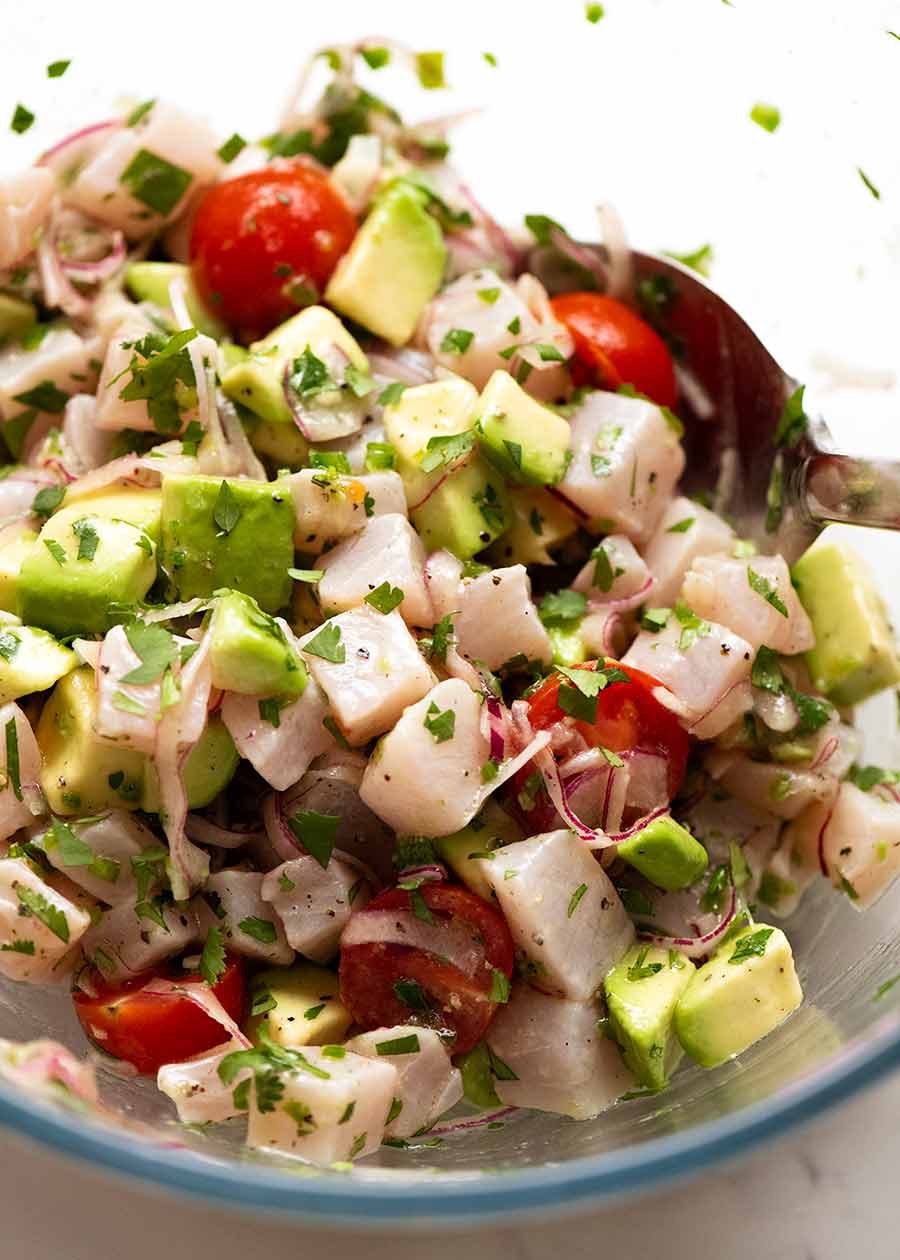
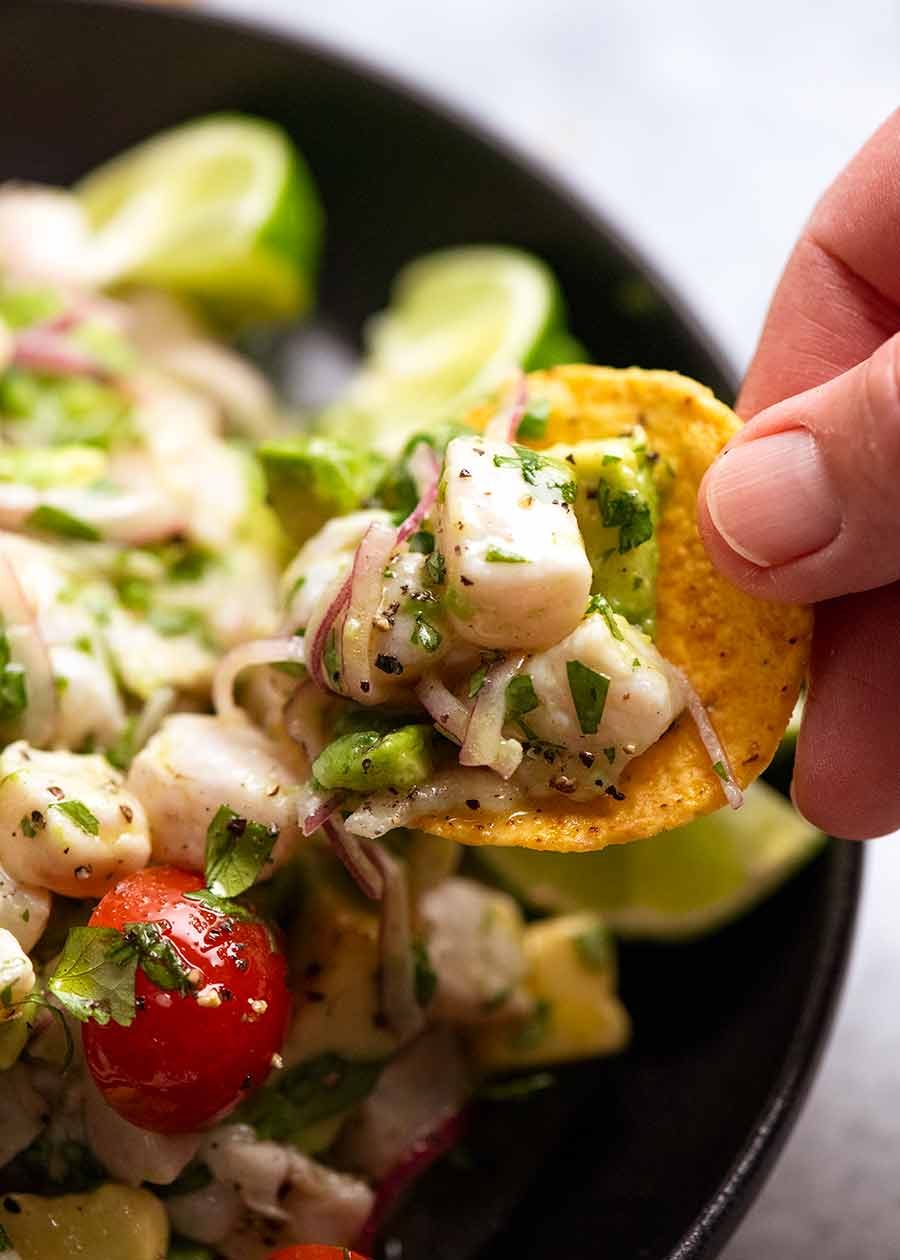
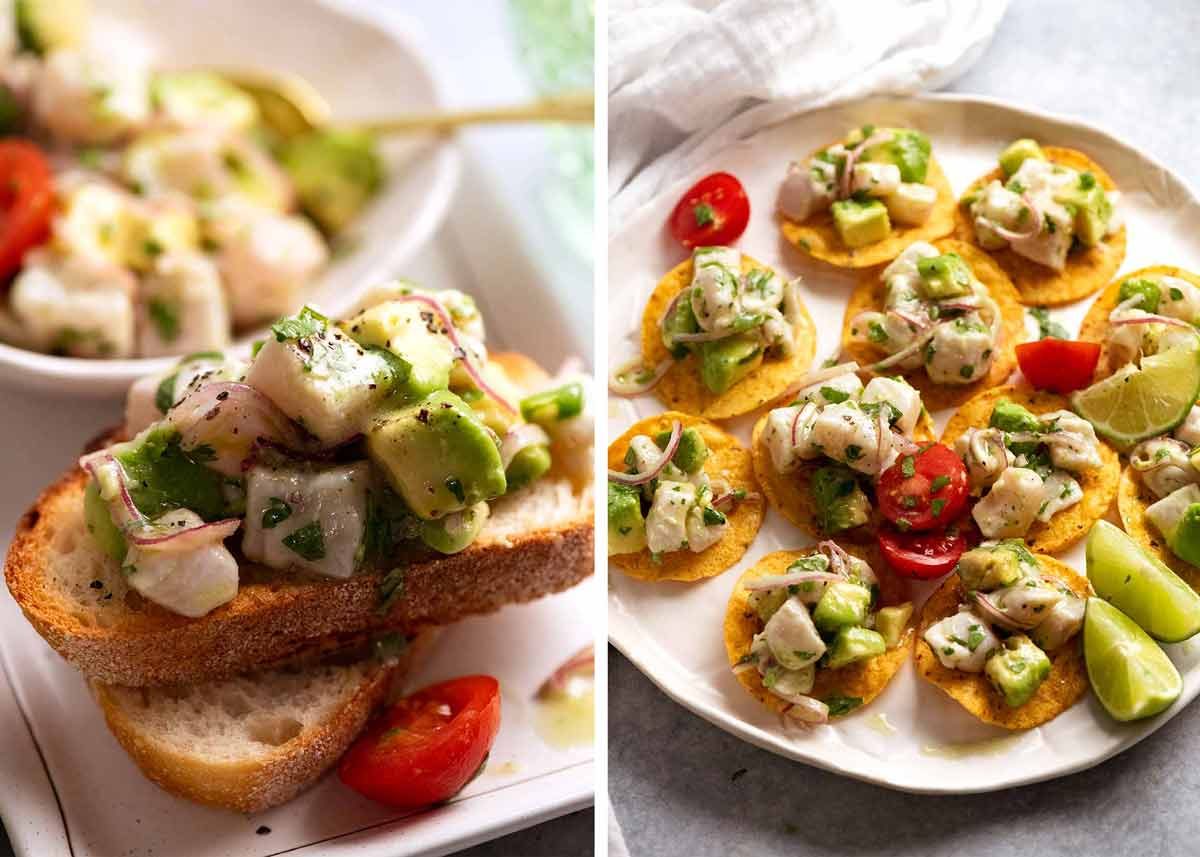
In Mexico and other parts of Central America, it’s often served in small “cups” or dishes , cocktail style, with corn chips or crispy tortillas/tostadas for scooping, as pictured above. I like using this idea to make platters of canapés to pass around at gatherings, as pictured on the below right.
In Peru it’s served as a meal with corn on the cob, slices of cooked sweet potato and sometimes with rice. In other countries it comes with plantain chips or rice.
In fine dining restaurants, it’s served in all sorts of fancy ways. One easy way is to spoon individual portions into a small dish with a side of crostini on the side (toasted small bread), as pictured below.
Of course, you can just by-pass all of that and just devour it straight out of the bowl with a spoon, which is exactly what I did. 🙂
I really hope you give this a go one day. Especially those of you who have previously been turned off by overly sour ceviche in the past.
Now – go make friends with some local fishermen! 😂 – Nagi x
Watch how to make it
Hungry for more? Subscribe to my newsletter and follow along on Facebook, Pinterest and Instagram for all of the latest updates.
Ceviche
Ingredients
“Cooked” fish:
- 400g / 14 oz kingfish, tuna, sea bass or other sashimi-grade fish suitable for raw eating (Note 1)
- 1/4 red onion , very finely sliced using mandolin (so it "flops")
- 2 tsp fresh jalapeño , finely chopped (or green chilli) – add more or less for spiciness
- 8 cherry tomatoes , halved (large ones quartered)
- 1/4 tsp black pepper
- 1/3 cup lime juice , fresh (or lemon juice)
Add ins:
- 1/2 tsp salt , cooking / kosher (or 1/4 tsp table salt, Note 2)
- 1 avocado , ripe, cut into 1.25cm / 1/2″ cubes
- 1/4 cup coriander/cilantro leaves , roughly chopped (sub chives)
- 2 tbsp extra virgin olive oil (Note 3)
Instructions
- Cut fish: Cut fish into 1.25cm / 1/2" cubes.
- Toss in lime, leave 5 minutes: Place in a bowl with onion, jalapeño, tomato, pepper and lime juice. Gently toss, then set aside for 5 minutes, mixing gently once.
- Add avocado then serve! Sprinkle over salt, then add avocado, coriander and olive oil. Gently stir, then serve immediately with corn chips (see in post for other ideas).
- Ceviche will be good for 20 minutes or so, then fish will start to overcook and firm up. Do not leave overnight (for food safety reasons).
Recipe Notes:
- Kingfish (pictured in post)- popular choice of fine dining establishments
- Sea bass – traditional in Peruvian
- Tuna and mackeral – popular in Mexico
- Prawns / shrimp – traditional in Ecuador, popular in Mexico
- Halibut or Patagonian tooth fish – Chile
- Salmon – not traditional but excellent for ceviche
- Bream – many species all around the world
- Swordfish – used in some Latin American countries.
- Trevally – not traditional in South America, but beautifully soft-textured and excellent for ceviche
- Cod and mahi mahi – Popular options in America.
Nutrition Information:
More Fresh Fish recipes
More recipes that make the most of sparkling fresh fish!


Life of Dozer
Lazy bugger – stretching out as far as he can to rescue his toy because he can’t be bothered to dive back in. Can you imagine if pool Lifeguards had the same attitude?? I’m gonna stretch out to try to save you, but if I can’t reach you without getting my feet wet then too bad, I’m gonna leave you floating facedown in the pool! 😂

i haven’t had the opportunity to taste all the different fish i would like to taste. if it is from the sea i love it!!
I live on the Gold Coast and my favourite fish is coral trout.
Nagi I have now tried quite a few of your recipes and they are quite brilliant. You put most others in the shade, plus the layout and videos are idiot proof. I am now a devoted fan. A big thank you. I will buy some great fish in the next day or two and give the Ceviche a try. Can’t wait! I adore a well grilled kipper with buttered brown bread and a very strong cup of English tea, and of course malt vinegar on top – no butter! otherwise Red Mullet, haddock, Dover sole (off the bone), and really fresh crab. For the draw on the fabulous knife, even though I am a Londoner, I now live in Phnom Penh, Cambodia so here’s hoping 😂 Give a big kiss and hug to Dozer for me, he’s fab and obviously spoilt rotten – glad he recovered so well! Best wishes and long may you continue and be successful! Thanks again
Texas, USA. My favorite seafood is either shrimp or scallops.
Victoria. Nothing beats an oven baked salmon.
Hi Nagi Salmon would be my favourite fish.
I live in Melbourne, Australia (one of those Victorians)
Love cooking your recipes & seeing Dozer
Hi Nahi, I live in Bangalore, India. My favourite fish is Rohu belonging to Carp family. They make amazing fish curry. Still very hesitant to make ceviche as my mindvoice goes – Will it be cooked ; Will it smell ? I am used to really well done fish.
Hi Nagi from Lancefield, Victoria. Love all fish but my favourite is kingfish ..sashimi style which we are having tonight from our favourite restaurant.
Favourite fish is freshly caught Whiting fillets.
Your recipe is similar to the Fijian ‘kokonda’ Delicious!!
Hervey Bay Qld.
Kwazulu Natal, South Africa
My favorite fish is Tuna!
Addicted to your amazing recipes Nagi. When I discovered your site it was like finding the Kimberly diamond that sits foremost in The Queen’s crown ❤
Oops! Got so excited I forgot to answer the questions.
Favourite fish barramundi.
From NSW Australia
Hi Nagi, I’m from Melbourne (sigh) and want to thank you for your Victorian Corner. Cheers me up so much – as does Dozer, bless him, wonderful to see him fully recovered. My 15 year old (adopted Chinese) daughter and I love your crustless ham cheese quiche, but I keep Charley Brown sauce in my fridge and she adores your fried rice. Thank you!
Hello Nagi from Paris, France. Love salmon for ceviche, but honestly it is such a great dish, i would be happy with any fish!
Burnaby BC Canada or as we call it the Wet Coast of Canada. For 8 years I worked for a seafood company, importing seafood for all over the world. I was so lucky to be able to try some great seafood. My favourite is Dungeness Crab. Love it dripping in butter. So good. Am so enjoying your recipes.
NSW Australia
I lurrrrrvvve monkfish. Big fat chunks in light batter… sighhhhh
My favourite fish for ceviche is Kingfish, for sashimi – Tuna, for Gravlax – Salmon, for fish and chips – flatheadtails, whiting, garfish, Snapper and lings for steaming or pan frying. I should stop now
Victoria Australia
NSW, Aus
Kingfish!
Go Dozer xxx
Hi Nagi,
My son absolutely loves anything fishy! I can’t wait to make this for him. My favourite fish is salmon, and Matthew’s would be sea bass. I live in Devon in the UK. Hugs for Dozer x
I am entering for my grandson James Whitmore who lives and works in Melbourne. He loves tuna in sushi and it would be great for this Cerviche. I am keen to try it myself. I have tried several of your recipes and find them really good.
I’m hooked on your artisan bread, now making a half white, half rye version and it is lovely😊 cheers, Margaret
Favourite fish is swordfish fillets,
Love all your recipes but love plant based ones & anything curry
Hi Nagi. Absolutely love your recipes. There are too many to mention that I’ve made 💕. I’m not a huge fish lover but enjoy salmon occasionally. I’m from Hamel, Western Australia